
When Stories Meet Numbers: How Read-Alouds Bring Math to Life in K-2 Classrooms
When Literacy and Mathematics Work Together
Read-alouds can make math come alive.
Not in a fluffy, “isn’t this cute?” way. In a cognitive, language-building, concept-anchoring way.
In primary classrooms, literacy often receives the majority of attention. Schedules are built around reading blocks, and professional development frequently centers on comprehension and phonics. Literacy absolutely deserves that focus. But some of the strongest hands-on math activities in kindergarten and early elementary classrooms occur when literacy and mathematics work together rather than compete for time.
When teachers intentionally use picture books during math instruction, they are not adding one more responsibility. They are strengthening foundational numeracy and supporting students as they build early number sense, problem-solving skills, and mathematical language.
Research in early childhood classrooms shows that students demonstrate measurable growth in early mathematics understanding when teachers pair math-focused read-alouds with intentional questioning, discussion, and exploration. The story itself sparks engagement, but the real impact happens when students talk, reason, and connect mathematical ideas to meaningful contexts.
Building Strong Math Foundations Through Story
Young children learn through language, storytelling, and shared experiences. Mathematics is no exception.
Read-alouds help students:
- Build mathematical vocabulary and languate fluency
- Create meaninful context for abstract math ideas
- Support discussion and collaborative reasoning
- Strengthen early math performance when paired with intentional questioning
When students hear math language in stories, they begin to internalize it. When they discuss ideas grounded in narrative, they begin to reason. When math connects to something familiar and engaging, students begin to see themselves as capable mathematicians.
What This Looks Like in Real Classrooms
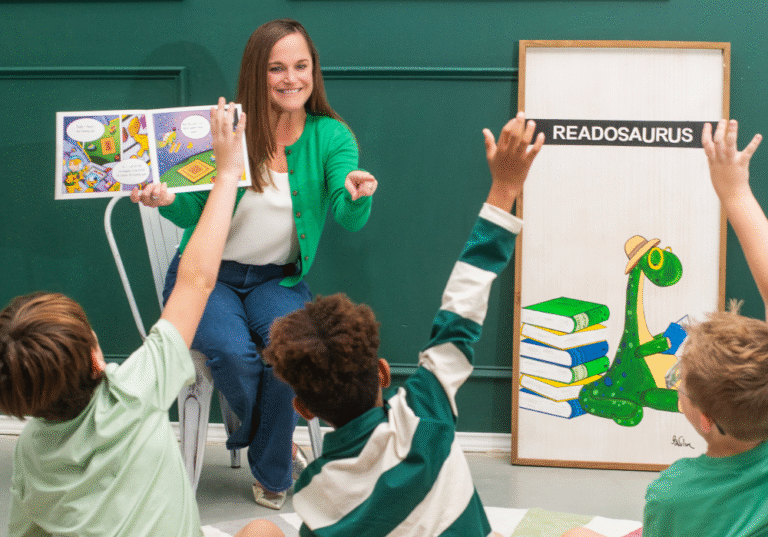
Anyone who has worked in a primary classroom has seen the power of story. Students lean in. They notice details. They make predictions. They talk.
That same energy can exist in math instruction.
Many teachers already use read-alouds beautifully during literacy blocks. The opportunity is recognizing that those same stories can anchor math thinking. Sometimes it simply means revisiting a familiar book and asking mathematical questions that deepen understanding.
And perhaps one of the most exciting benefits is that read-alouds invite families into mathematical learning. Families do not need to teach strategies or replicate classroom procedures. They simply need to read and talk. Questions like “How many do you see?” or “What changed?” help children connect mathematics to everyday life.

How Read-Alouds Strengthen Mathematical Understanding
Vocabulary is the Gateway to Mathematical Thinking
Students cannot reason about ideas if they do not yet understand the language connected to those ideas. Mathematical vocabulary gives structure to thinking.
Books like The Greedy Triangle introduce geometry vocabulary in ways that feel engaging and memorable. As the triangle adds sides and transforms into new shapes, students naturally encounter terms such as pentagon, hexagon, and polygon in a meaningful story.
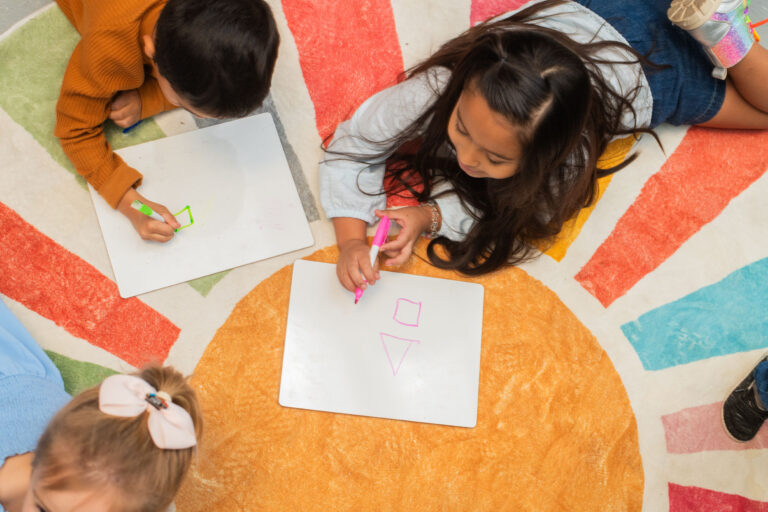
When vocabulary is introduced through narrative rather than isolation, it becomes more accessible and more likely to stick.
Context Makes Abstract Ideas Concrete
Mathematics is beautifully logical, but it can also feel abstract for young learners. Stories provide context that helps students make sense of number relationships.
Count on Pablo allows students to explore skip counting, number relationships, and multiplication and division within a story setting. Instead of multiplying numbers in isolation, students think about what is happening in the story and explain their reasoning.
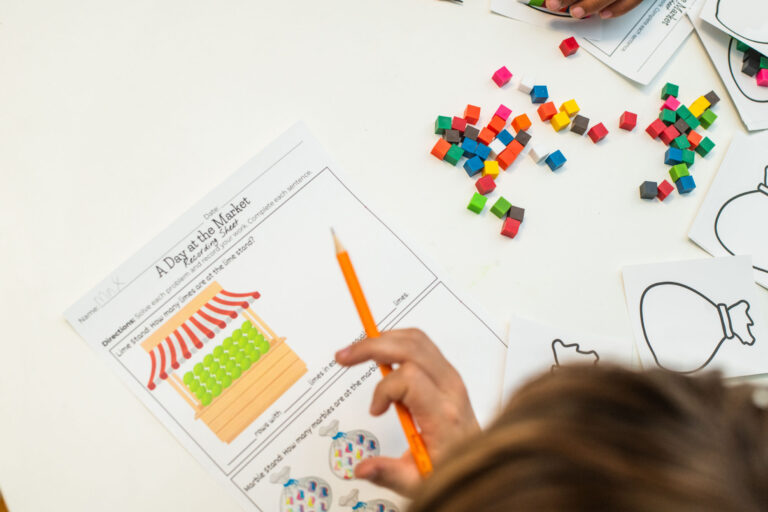
Context helps reduce cognitive load and strengthens number sense.
Discussion Deepens Reasoning
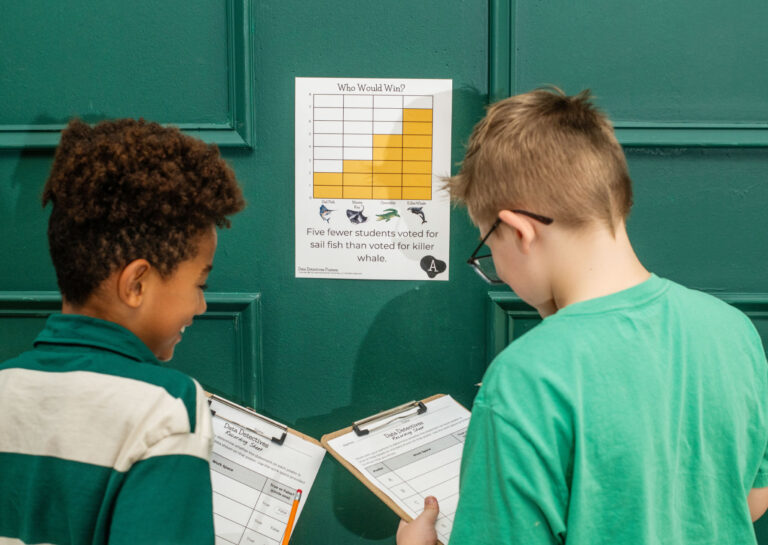
Read-alouds naturally slow down instruction in a productive way. They create space for curiosity and conversation.
Ten Playful Penguins invites students to think about counting, representing numbers, and adding and subtracting in different ways. When teachers pause to ask questions like:
- How many penguins are there now?
- What might happen if one leaves?
- How do you know there are eight without recounting?
- What patterns do you notice?
Intentional Questioning Strengthens Understanding
The read-aloud itself is not the instructional strategy. The purposeful thinking connected to it is.
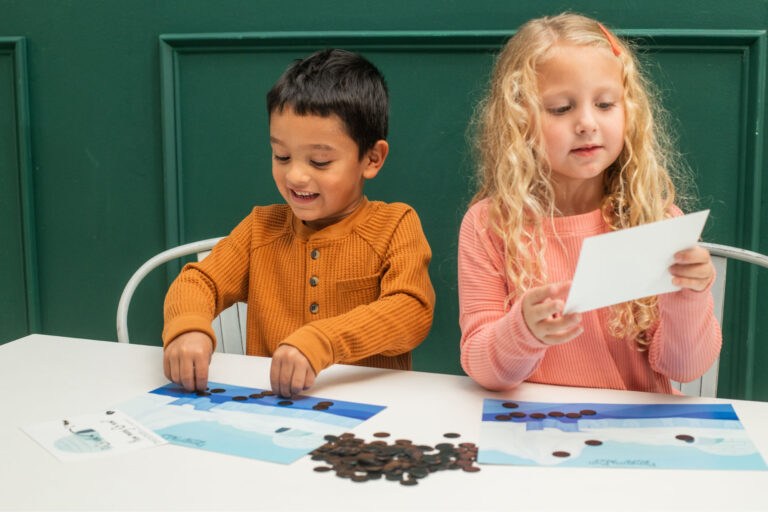
When teachers align read-alouds with learning goals and follow each story with hands-on exploration, students demonstrate stronger growth in number sense, geometry, and measurement. The story sets the stage, and hands-on exploration deepens learning.
Within Progressions by Alba Math, read-alouds are intentionally paired with hands-on learning experiences designed to support conceptual understanding and mathematical discourse.
How Early Experiences Shape Mathematical Identity
Early mathematics experiences shape how students see themselves as learners.
When children experience math as something they can talk about, reason through, and connect to meaningful stories, they begin to view themselves as capable mathematicians. That confidence supports future achievement, persistence, and engagement.
Strong early numeracy supports later success in place value, operations, problem-solving, and data analysis.
Foundational numeracy programs prioritize number sense, reasoning, and big mathematical ideas, not just coverage of many disconnected skills. They build coherent progressions, frequent discussion, and tasks that support both struggling and high‑achieving students in the same classroom.
How Teachers Bring Read-Alouds Into Math Instruction
Teachers use read-alouds in flexible and manageable ways:
- Reading the book during literacy time and revisiting key ideas during math
- Reading portions of the book across multiple days
- Using stories as lesson launches before hands-on math activities
- Pairing read-alouds with discussion prompts and manipulatives
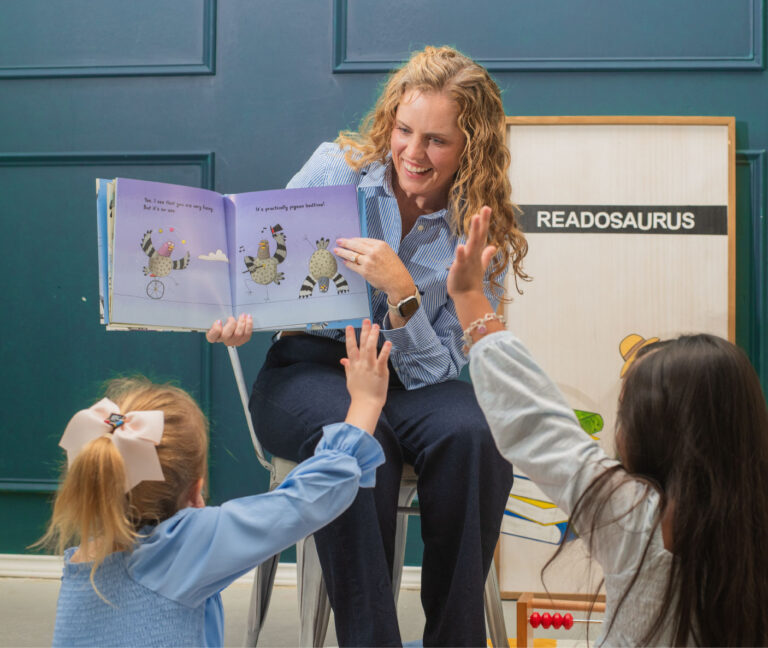
Within Progressions, picture books are intentionally embedded within each unit to support vocabulary development, conceptual understanding, and meaningful mathematical context.
Supporting Meaningful Math Learning in Your Classroom
If building strong number sense, mathematical discourse, and hands-on conceptual learning is a priority in your classroom or district, intentionally integrating read-alouds may be a powerful next step.
Progressions by Alba Math supports teachers and districts seeking research-based instructional materials designed to strengthen early mathematics learning, whether through our comprehensive math program or professional learning experiences.
FAQs:
Where Do I Start?
Start simple. Do you have a picture book you love? That is enough.
Consider the following:
- Can this book set the context for a math exploration?
- Does it naturally embed math vocabulary?
Begin by reading the book with your students. Then plan a few intentional questions that connect directly to your learning goal. Strategic pauses and discussion can transform a story into a meaningful mathematical learning experience.
What Books Work Across Grade Levels?
One of our favorites is One Is a Snail, Ten Is a Crab. While it is often viewed as a counting book centered around counting by feet, it supports learning across multiple grade levels.
- Kindergarten students can practice counting and representing numbers.
- First-grade students can explore composing and decomposing teen numbers.
- Second-grade students can extend learning into early multiplication and division concepts.
A single text can provide multiple entry points and support a strong progression of mathematical understanding.
Within Progressions by Alba Math, carefully selected picture books are embedded throughout each unit to support vocabulary development, provide meaningful context, and encourage mathematical reasoning. The read-aloud experience is intentionally integrated into instruction rather than treated as an add-on. To see a list of books embedded at each grade level, click on the following links.
I Only Have a 45-Minute Math Block. When Do I Fit In Read-Alouds?
Teachers implement read-alouds in a variety of flexible ways:
- Some teachers introduce the book during their literacy read-aloud time and revisit relevant sections during math instruction.
- Some teachers read portions of the book over multiple days, similar to a chapter book approach.
- Some teachers use the story as a warm-up or lesson launch before transitioning into hands-on exploration.
The goal is not to read the entire book in one sitting. The goal is to support student sense-making and deepen mathematical understanding through meaningful connections.